Drone Thermography

Photovoltaic Systems

Some of our work​

What problem do we solve?

A photovoltaic system that is degrading gives no warning. Remote monitoring records the drop in output, but does not locate the problem or measure its severity. Hot spots, faulty cells and failed bypass diodes develop silently: they reduce yield, increase the risk of fire and may invalidate insurance cover if left undocumented.

After five years of operation, approximately 20% of photovoltaic systems have defects that reduce performance or increase electrical risk — most of the time without the owner or operator being aware of it.

What do we do?

We carry out aerial thermographic inspections using a drone equipped with a high-resolution radiometric thermal camera, in compliance with standard IEC TS 62446-3, without shutting down the system and without physical access to the roof or ground array.

We deliver a report signed by an ISO 9712 Level 2 certified Thermographer, including:

  • anomaly classification by ΔT (hot spots, failed bypass diodes, faulty cells, short-circuited strings);
  • georeferenced map showing the exact position of each anomaly.

For a complete assessment of the structures and rooftops on which the system is installed, we also offer aerial drone inspections.

How do we work?

Dasù, Icona, Computer

Our office handles everything:

  • We collect information about the system — type, capacity, layout plan if available — to plan a targeted flight;
  • We check the weather forecast for the day of the inspection: IEC TS 62446-3 requires a minimum irradiance of 600 W/m² and wind below Beaufort 4 — the inspection is only carried out when conditions are guaranteed;
  • We schedule the date and time of the inspection;
  • We manage any airspace authorisations required (Prefecture, Airport Authority, etc.).
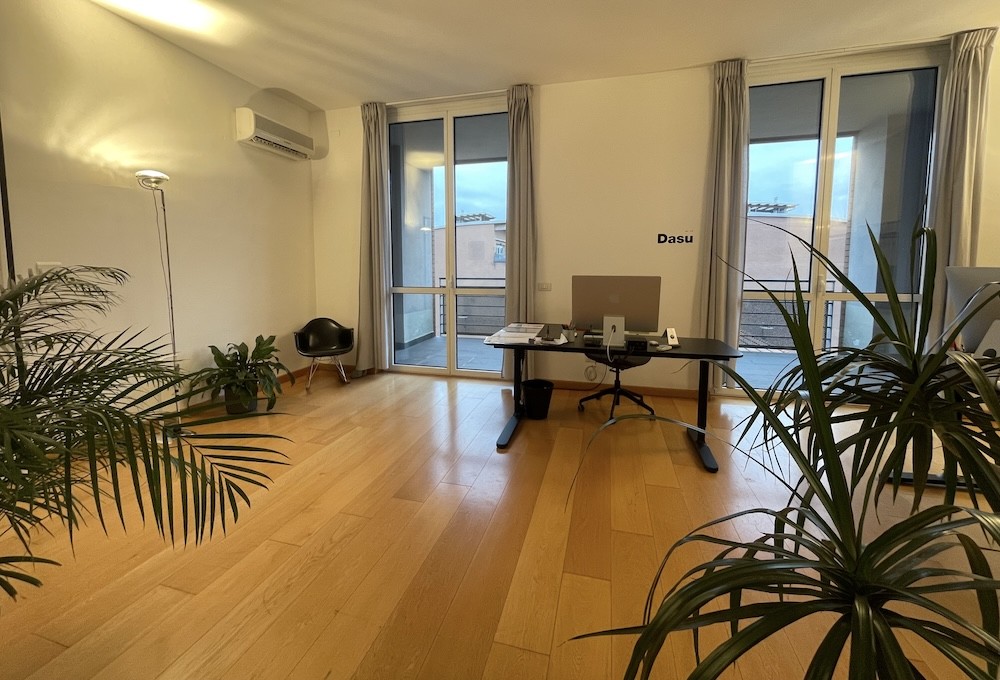
Ufficio Dasù (Milano, Via Savona 123)
Analisi Termografiche con Drone
Dasù, Icona, Drone

The drone captures what cannot be detected from the ground:

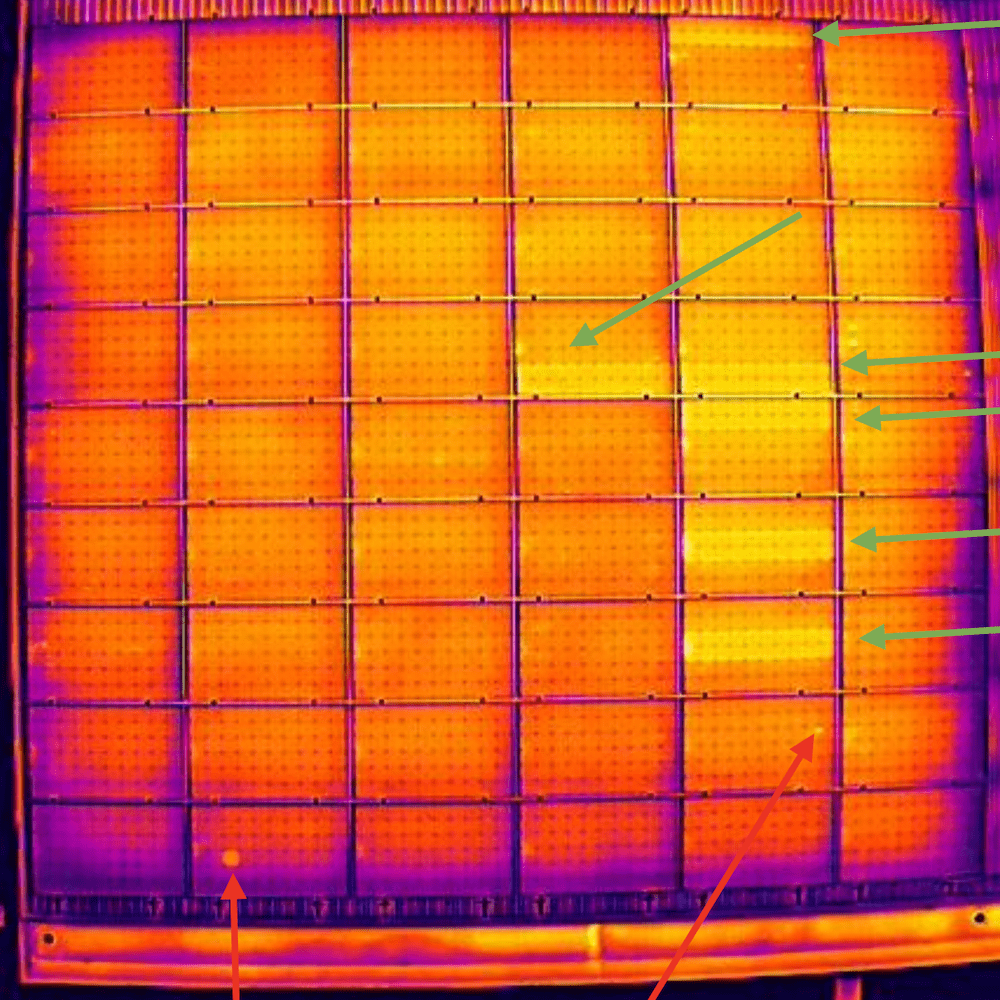
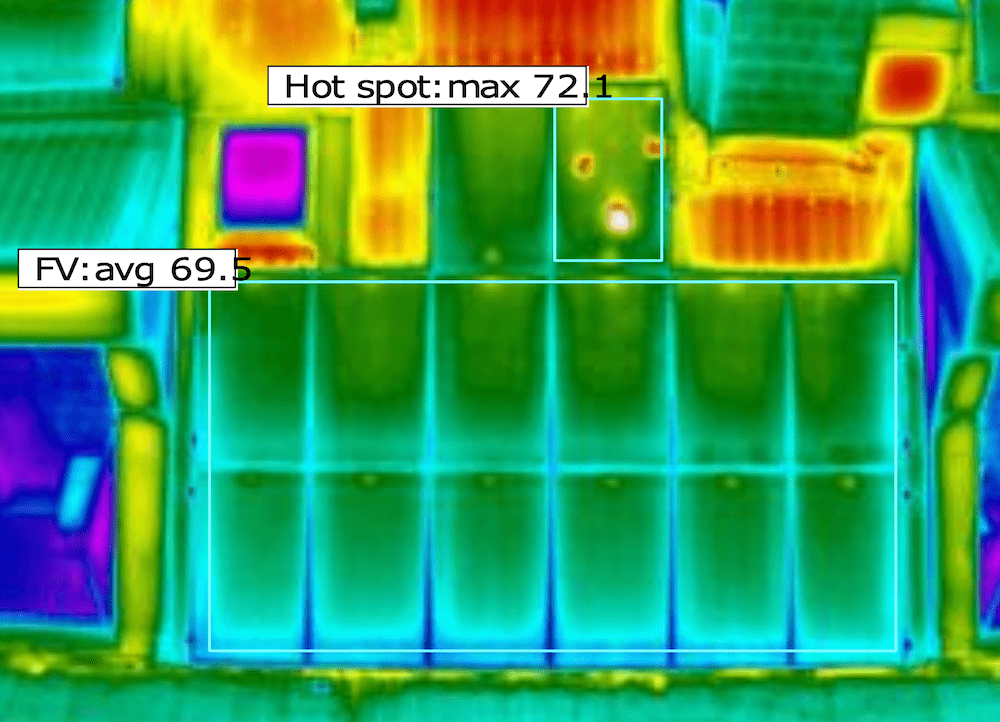
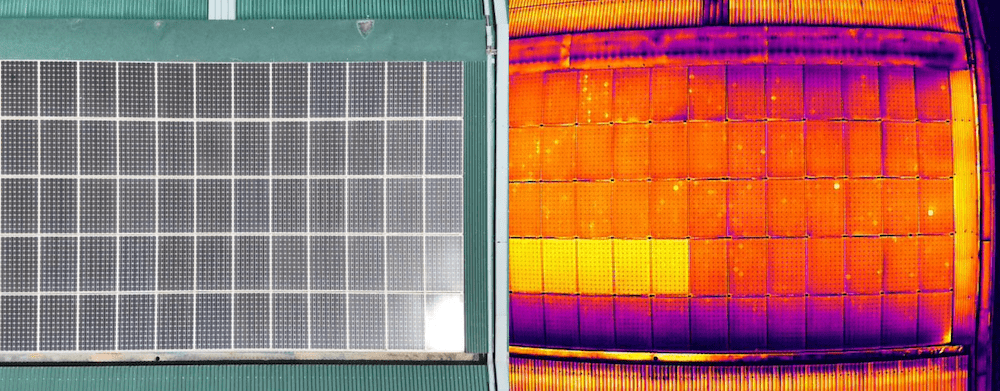
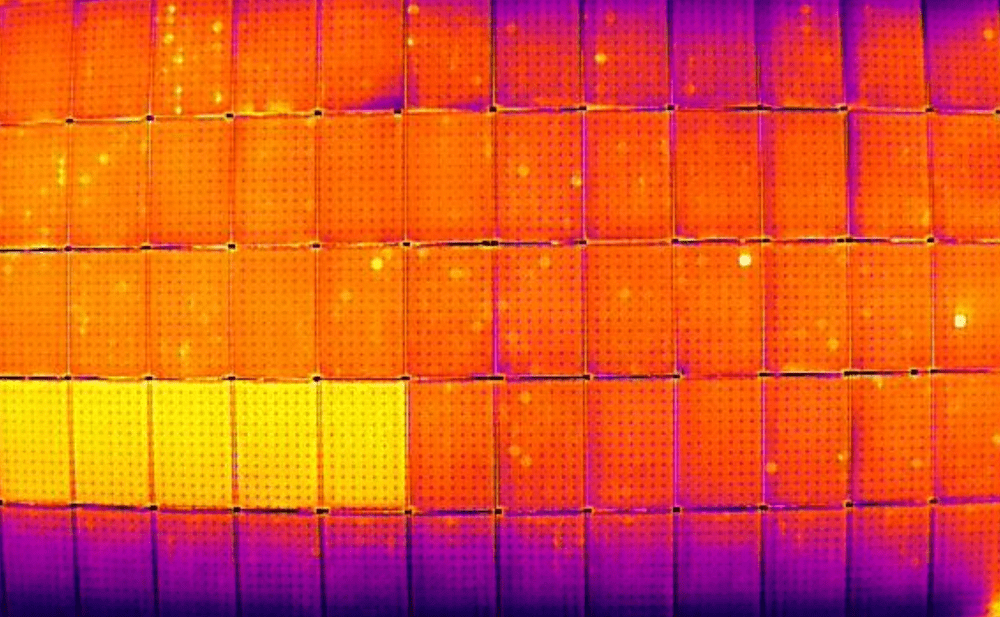
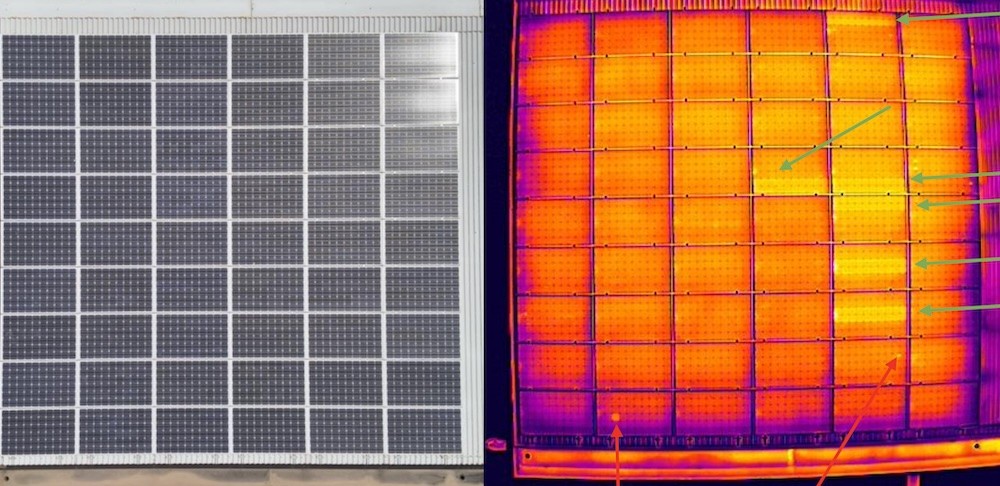
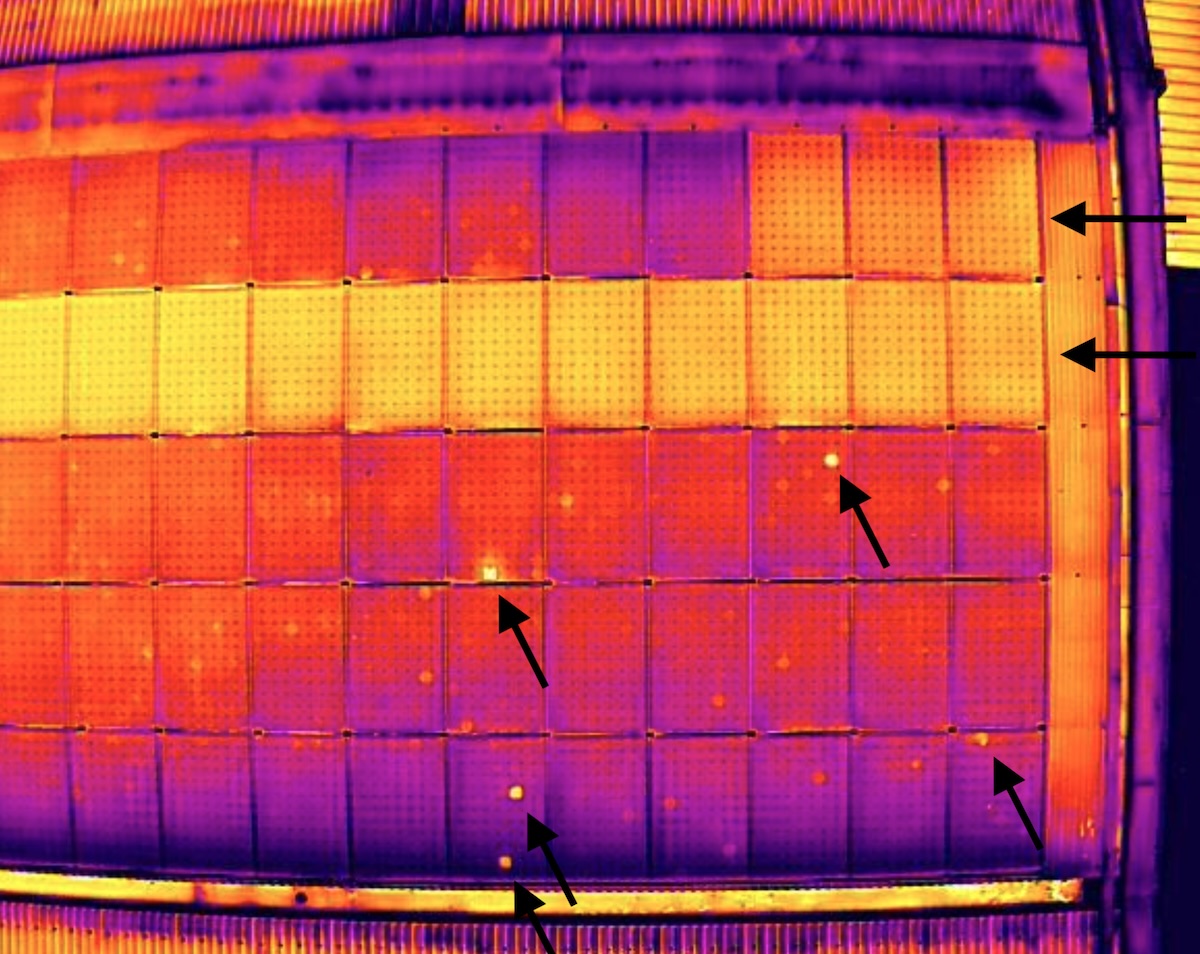
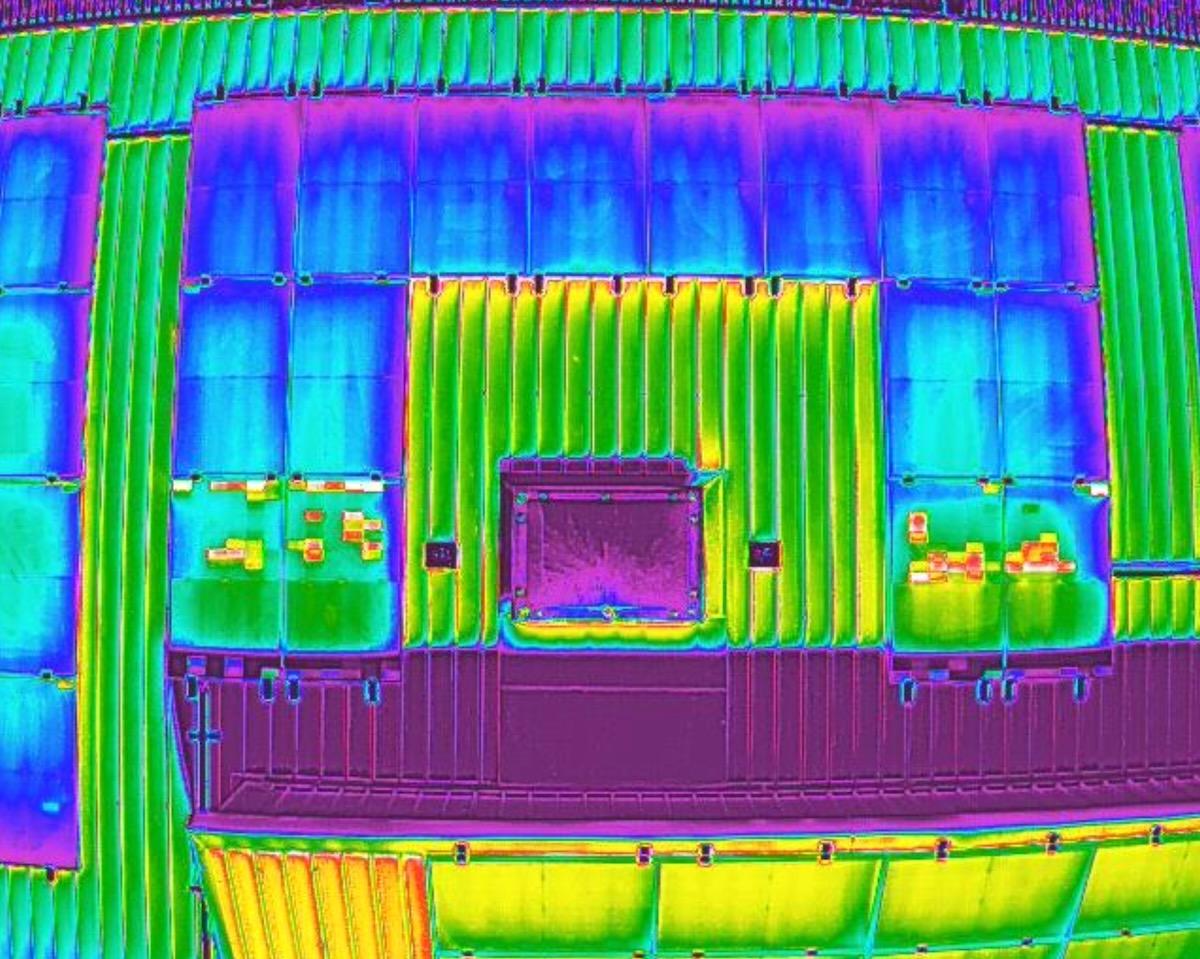
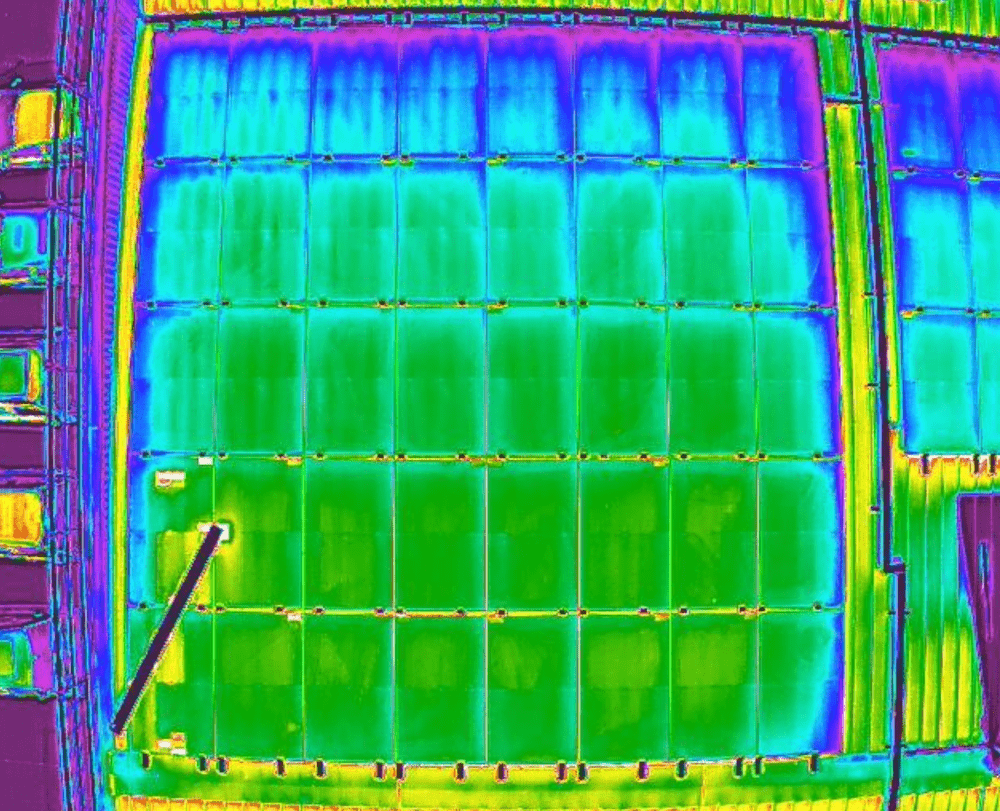
Using a high-resolution radiometric thermal camera mounted on the drone, we simultaneously acquire infrared thermograms and RGB images of every module in the system, from above and at the optimal nadir angle. The temperature of each cell is measured with precision, without interrupting production and without physical access to the roof or field.

Termografia con Drone per la Ricerca Distacchi sulla Facciata (Peschiera Borromeo - MI)
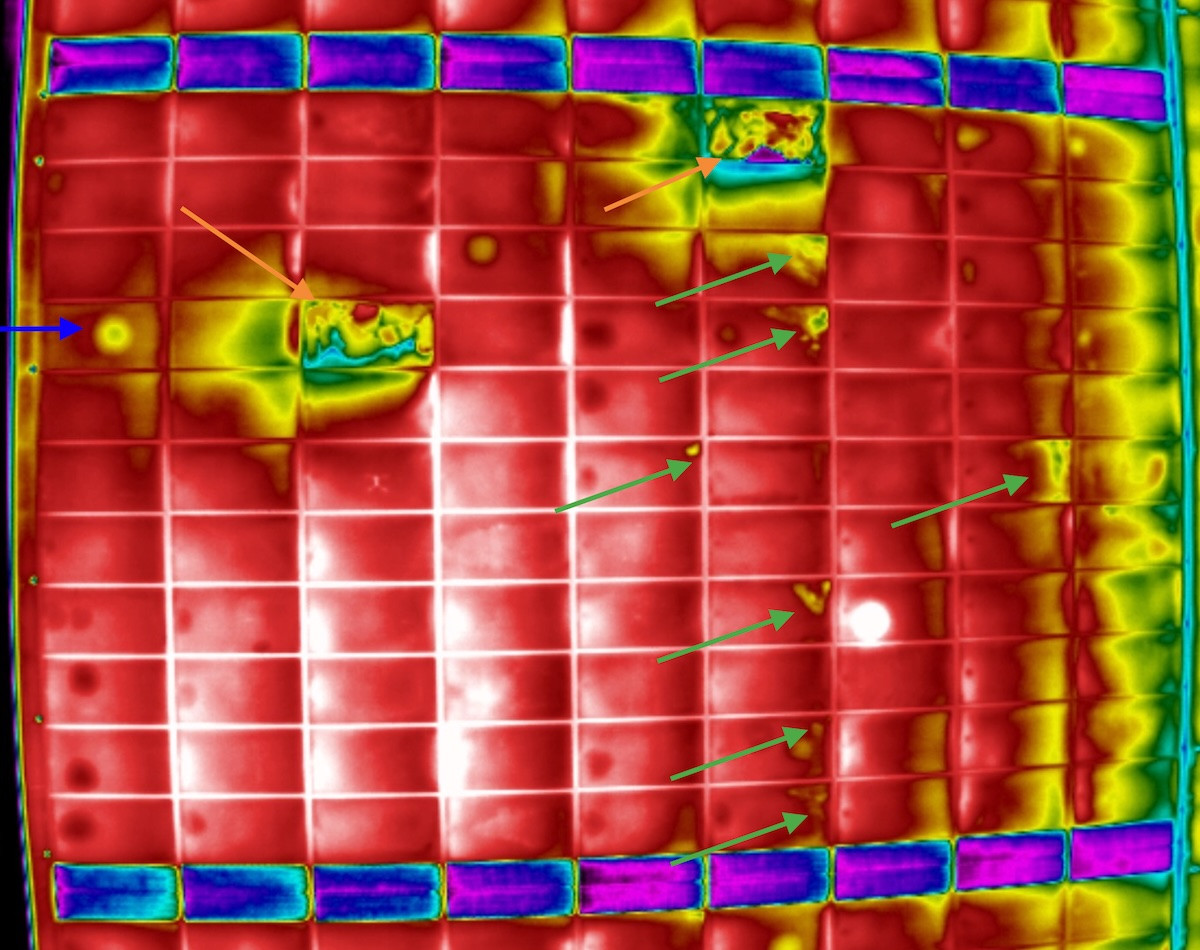
Drone Thermography of a Residential Photovoltaic System
(Peschiera Borromeo - MI)
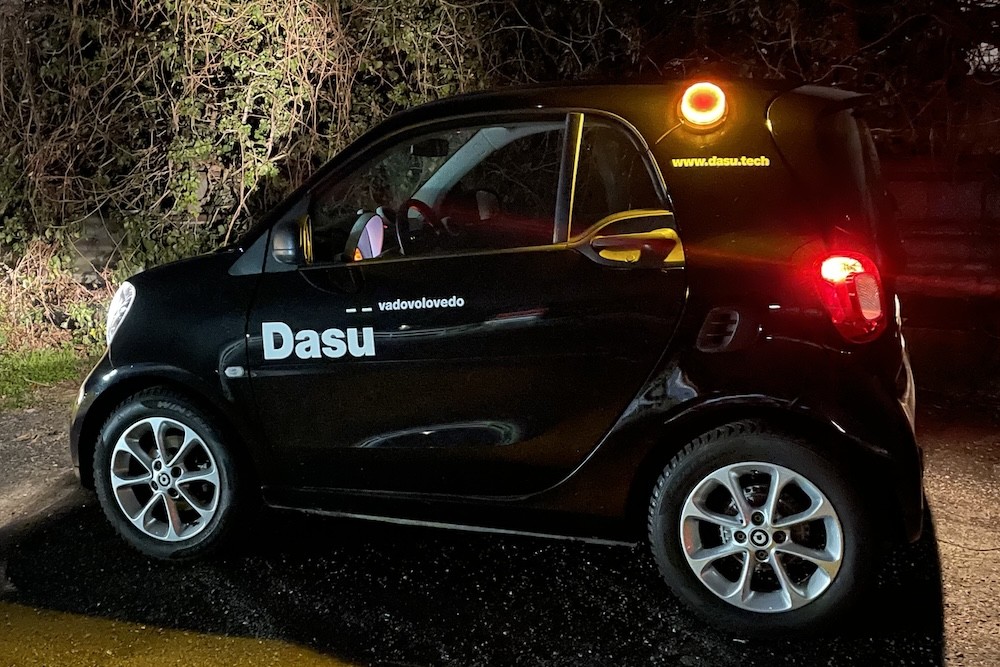
DasùMobile, attrezzata per ogni missione di termografia fotovoltaica (Cesano Maderno - MB)
DasùMobile, equipped for every photovoltaic thermography mission
(Cesano Maderno - MB)
Icona PDF

All data is processed and interpreted in our office by our certified Thermographer (Level 2), who produces a technical report compliant with IEC TS 62446-3, including:

  • RGB photographs and Infrared Thermograms (IR) for each detected anomaly;
  • anomaly classification by ΔT — hot spots, failed bypass diodes, faulty cells, short-circuited strings — with estimated attributable output loss;
  • Signed Thermographic Report, with georeferenced anomaly locations.
Dasù, Icona, Cloud

All material is delivered via a dedicated link, valid for 2 months, which the client can share with anyone they wish.

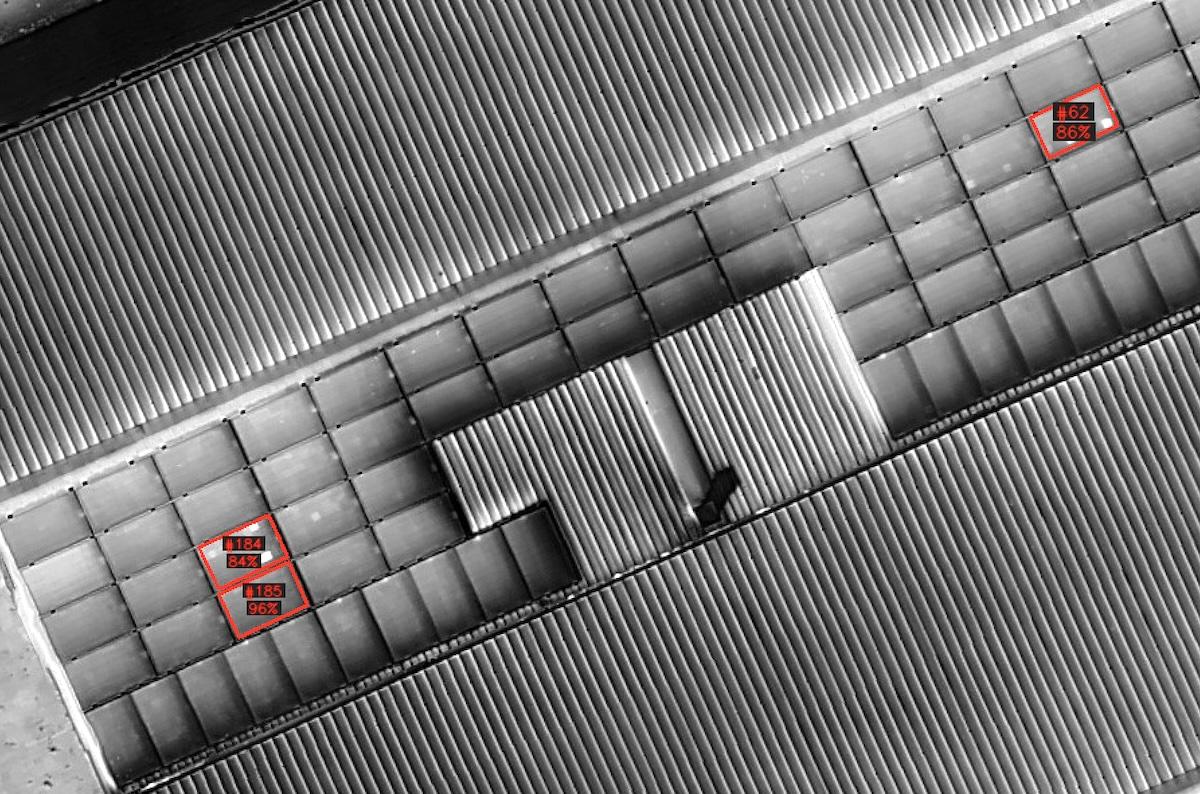
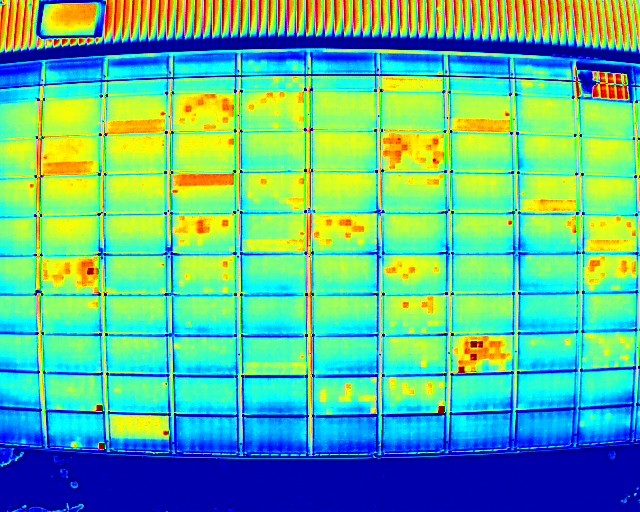
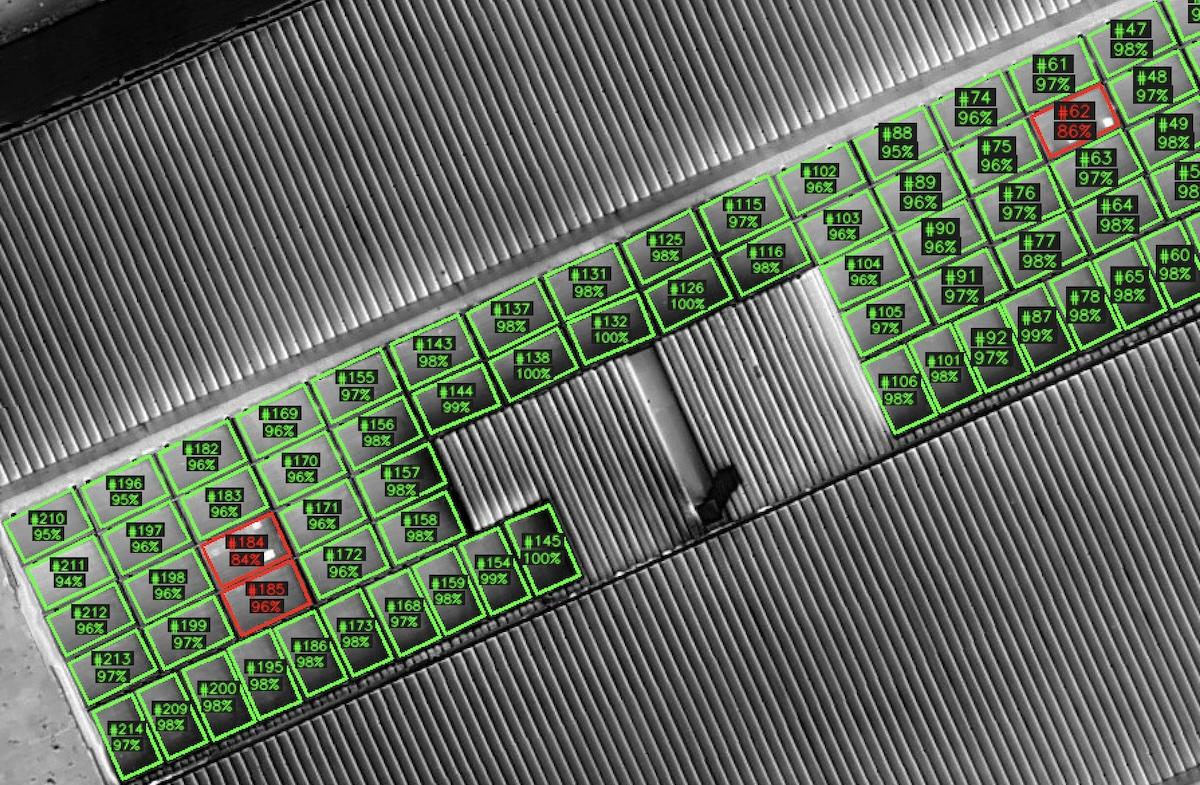
Mappa termografica IA con percentuali di efficienza dei pannelli fotovoltaici, capannone industriale a Siziano (PV)
Termografia e Mappatura IA Pannelli Fotovoltaici con Drone (Capannone Industriale, Siziano)

Who is this service for?

We work with facility managers and plant managers at manufacturing, logistics and commercial companies with photovoltaic systems on rooftops or covered structures, who need to document the system’s condition for fire prevention compliance under VVF Circular DCPREV 14030/2025 (Italian fire safety regulation) and to keep their insurance cover active.

We work with O&M managers and operators of commercial, industrial and utility-scale photovoltaic plants who monitor output remotely and need to pinpoint the anomalies that the monitoring system flags but cannot identify — underperforming strings, faulty modules, failed bypass diodes.

We work with photovoltaic system owners — residential rooftops, commercial buildings or ground-mounted arrays — who notice a drop in production, have experienced a severe weather event, or are approaching the end of their ten-year module warranty and want a certified technical assessment.

We work with photovoltaic installers and maintenance companies who want to offer their clients a certified thermographic inspection service, without investing in radiometric equipment and an ISO 9712 Level 2 certification.

We work with public bodies and institutions — schools, hospitals, local authorities — with photovoltaic systems subject to Italian fire authority inspections, who need to record periodic checks in the fire safety register.

Dasù, Icona, FAQ

When can a thermographic inspection of a photovoltaic system be carried out?

The inspection requires specific weather conditions as defined by IEC TS 62446-3: minimum solar irradiance of 600 W/m², wind below Beaufort 4 and clear sky. In practice, it is carried out during the central hours of the day — approximately 10:00–15:00 — on clear, sunny days with no cloud cover. The optimal period is April to September. Before every inspection we check the weather forecast and confirm the date only when conditions are guaranteed.

Does the system need to be shut down during the inspection?

No. Drone thermography is carried out during normal operation — the modules must be actively exposed to sunlight in order to generate the temperature differences detectable by the thermal camera. No shutdown is required, no access to the inverter room and no electrical work. The inspection is entirely non-invasive and does not interrupt energy production for a single hour.

What anomalies does drone thermography detect on a photovoltaic system?

Aerial thermography detects all anomalies that generate measurable temperature differences: hot spots on individual cells or entire modules, failed bypass diodes, faulty cells, short-circuited strings, advanced-stage PID (Potential Induced Degradation) and abnormal partial shading. For each anomaly detected, we calculate the ΔT normalised to 1,000 W/m² in accordance with IEC TS 62446-3 and classify it by severity, with probable causes and recommended corrective actions.

Is the report compliant with IEC TS 62446-3?

Yes. Inspections are carried out in full compliance with IEC TS 62446-3, which defines the procedures, operating conditions and anomaly classification criteria for thermographic inspections of photovoltaic systems. The final report is produced and signed by our ISO 9712 Level 2 certified Thermographer — the qualification required for the document to hold full technical and legal validity. A copy of the certificate is available on request.

Is thermography required under Italian fire safety regulations?

Italian fire authority circular DCPREV 14030/2025 introduces the obligation to carry out documented biennial fire risk assessments for photovoltaic systems installed on buildings subject to fire prevention controls. The regulation explicitly identifies thermography compliant with IEC TS 62446-3 as the technically appropriate method to demonstrate compliance and to record the checks in the fire safety register.

How often should a thermographic inspection be carried out?

IEC TS 62446-3 prescribes periodic inspections as part of the system maintenance plan. Italian fire authority circular DCPREV 14030/2025 sets biennial inspection as the minimum for buildings subject to fire prevention controls. For high-output systems or those with active warranties, we recommend annual inspections. We always recommend an inspection following severe weather events — hail, lightning strikes — and ahead of the ten-year module warranty expiry.

Does thermography detect all types of fault in a photovoltaic system?

Thermography detects anomalies that generate measurable temperature differences during operation. It does not replace electrical testing (I-V curve, Voc/Isc string measurements) for a complete performance diagnosis, nor electroluminescence testing for the detection of microcracks not yet thermally active. For systems over ten years old or showing significant output losses, combining thermography with electrical testing is recommended for a complete diagnosis. For uniform soiling on panels, which does not generate temperature differences and cannot be detected thermographically, we offer a dedicated photovoltaic panel cleaning with drone service.

How long does the inspection take?

From the date of the flight, the report is delivered within 7–10 working days. For large-scale systems with a high number of anomalies, the timeframe may extend to 15 working days. All material — thermograms, RGB photographs, signed report and georeferenced anomaly map — is made available via a dedicated link, valid for 2 months and shareable with maintenance teams, insurers or technical managers.

Are flight authorisations required?

It depends on the location of the system. In Milan and many urban areas a prior authorisation is always required. In rural or industrial areas the situation varies according to the airspace classification. We handle all necessary procedures independently — Prefecture, Airport Authority, relevant bodies — with no involvement required from the client. The authorisation process is initiated as soon as the assignment is confirmed.

What guarantees do you offer?

We operate with ISO 9712 Level 2 certified Thermographers — the qualification required by IEC TS 62446-3 for reports with full technical and legal validity. Our pilots hold ENAC Specific category authorisations (A1/A3, A2, STS-01) with documented periodic training. Our drones are registered with ENAC and covered by third-party liability insurance up to €6,500,000; professional activity is covered by an additional policy up to €1,200,000.

Do you have any other questions?

We are available — you can contact us via WhatsApp or through the Contact page.

Why Dasù?

🛡️ Public liability insurance (R.C.) for the exercise of our business activity (coverage limit € 1,200,000);

🛡️ Public liability insurance (R.C.) for our entire UAS (drone) fleet (coverage limit € 6,500,000);

👨‍✈️ Professional, qualified Dasù pilots, under the operational direction and UAS coordination of pilot Alessandro Farina:
     ✓ more than 4,500 missions completed;
     ✓ “Open” certificate (A1/A3, A2) and “Specific” certificate (STS01, CRM, COM);
     ✓ GWO (WAH) certification for wind turbines;
     ✓ PPE-FALL certificate for the use of fall-protection PPE when working at height;
     ✓ Fire safety officer certificate;
     ✓ First aid officer certificate.

Drone photovoltaic thermography:
what changes compared to traditional methods

Without the Drone

Traditional thermographic inspection requires an operator to physically walk the site with a handheld thermal camera. On a rooftop: ladder or scaffold access, mandatory fall-arrest PPE, working-at-height safety plan. On a ground-mounted array: hours of walking between module rows. Operational speed: 100–200 modules per hour. A 200–500 kWp system requires 1–2 full working days. The angle of capture from ground level or a ladder is not optimal for tilted modules, reducing the accuracy of the thermal reading. Remote datalogger monitoring flags a performance drop but does not identify the specific module.

With the Drone

Zero physical access — no fall-arrest PPE, no ladder, no working-at-height safety plan: the drone flies over without touching anything;

From days to hours — a 500 kWp system inspected in 2–4 hours; a 10 kWp residential system in 30–45 minutes;

Optimal nadir angle — the drone flies perpendicularly above the modules: ideal capture angle, no parallax, more accurate thermal reading than a handheld camera;

Dual channel in a single session — IR thermograms and RGB photographs acquired simultaneously: thermal anomalies and visible physical damage documented in one visit;

Precise anomaly location — georeferenced imagery: every faulty module identified on the system layout, with no ambiguity;

Legally valid report — compliant with IEC TS 62446-3, signed by an ISO 9712 Level 2 Thermographer: accepted by insurers, fire authorities and module manufacturers.

Last Updated: 13 June 2026

Let’s talk about your specific case.

We can help you understand whether drone thermography is the right solution for your photovoltaic system.

Start typing and press Enter to search

Shopping Cart